
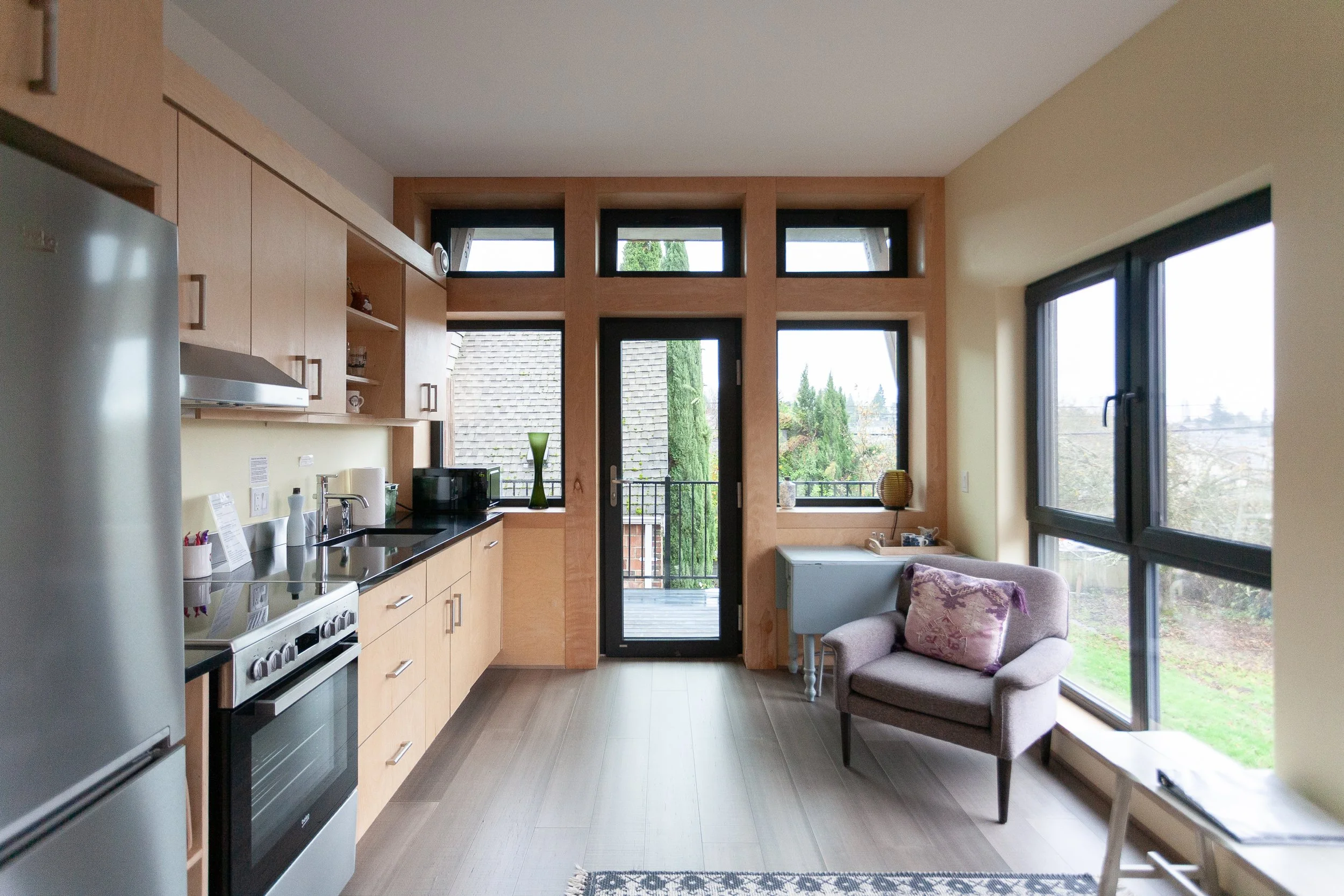
Mini Z interior: second floor apartment
Location: Seattle, Wa
Project Type: Backyard DADU / Small Home & Garage
Completed: 2020
Architect: Joe Giampietro
Builder: Bucktide General Contractors
SF: 2,000
Project Overview
Mini Z is a small, two-story Passive House designed by Joe Giampietro and tucked into a Seattle backyard. At first glance, it appears to be a simple, well-built detached accessory dwelling unit (DADU). In reality, it’s a highly technical, low‑energy building that demonstrates what’s possible when building science, craft, and curiosity come together.
The project reflects more than a decade of hands-on experimentation with Passive House principles and has become a proving ground for new assemblies, products, and ways of thinking about durability, comfort, and carbon.
The Impetus for Passive House
The project began years before construction. In 2009, architect Joe Giampietro took a Passive House course. At the time, Passive House was well established in Europe but still emerging in the U.S. The methodology immediately stood out for its radical improvements in energy efficiency, thermal comfort, and indoor air quality. Joe thought, “This is the new way to build.”
Joe went on to build some of Seattle’s earliest Passive House structures, including a portable backyard cottage used for public demonstration. As zoning rules around ADUs evolved, the opportunity arose to bring those lessons home—literally—by building a small Passive House in his daughter’s backyard. Bucktide General Contractors was hired to pull off the complex project and make it a reality.
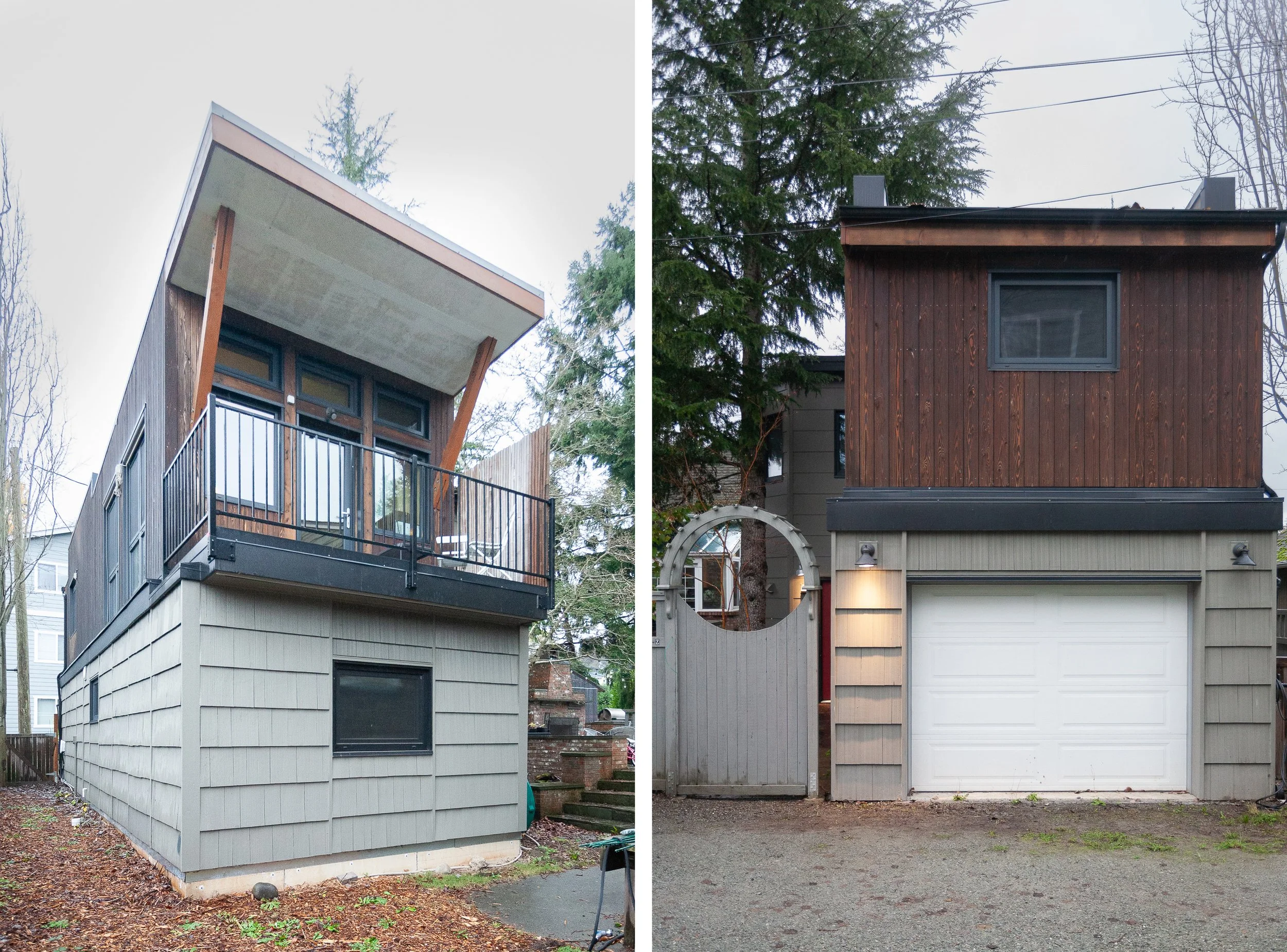
Mini Z exterior: a residential apartment sits atop garage and home gym
A Collaborative Build
Mini Z was a collaborative effort between Joe, the Wood Technology Center (WTC), and Bucktide. The second floor was built off-site at the WTC and then relocated to the backyard.
Bucktide constructed the first floor, including its foundation, utilities, and systems, and then tied the two floors together, requiring careful planning to maintain a continuous air and thermal barrier. This project marked the team’s first Passive House build. Owner Alex Saunders and several employees completed Passive House Institute US (PHIUS) training during the process, and many of the techniques piloted here have since become standard practice across Bucktide projects.
Building Envelope & Assemblies
Thermal Control
High-Performance Enclosure: continuous insulation helps reduce heating energy needs (Seattle climate rarely requires “cooling”).
Thermal‑Bridge‑Free Walls: minimizing heat leakage eliminates “cold corners” and minimizes interior mold growth.
Upper Level: SIP panels at walls and roof provide roughly twice the thermal resistance required by code, with minimal thermal bridging.
Lower Level: A decoupled double‑wall system—two 2×4 walls separated by a gap and packed with continuous insulation—creates a wall nearly 10 inches thick. The two walls never touch, dramatically reducing thermal bridging.
Waste Reduction: An existing garage was carefully dismantled and reused as part of the exterior wall assembly, reducing material waste and embodied carbon.
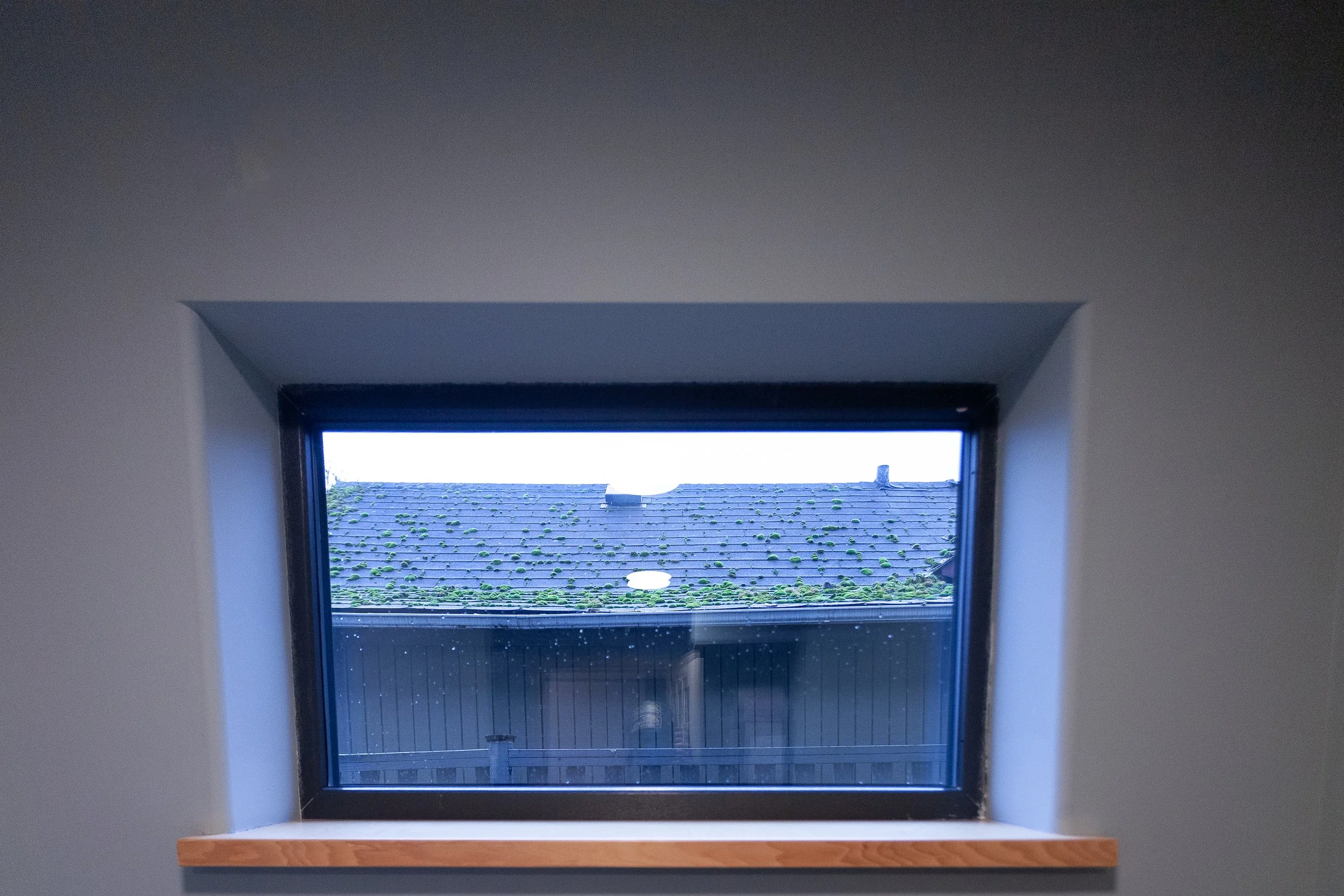
Thermal bridge barrier: 10” thick walls on the lower level
Air Control & Moisture Management
Air Sealing: Airtightness is a cornerstone of passive building, supporting both durability and energy savings by minimizing the seepage of outside air and the loss of conditioned air.
All sheathing seams and penetrations were wet‑flashed.
Vapor Open: Achieving Passive House performance in the PNW means taking moisture seriously.
Vapor‑permeable membranes and liquid‑applied flashing were used to allow assemblies to dry outward while blocking bulk water.
Materials were selected so no part of the wall assembly traps moisture—a critical detail in super‑insulated buildings.
This approach prioritizes long‑term durability, not just energy metrics.
Windows & Doors
High‑performance windows are essential—and often the biggest cost hurdle. Mini Z uses Euro-Tech triple‑pane European‑style windows with insulated frames, roughly twice as efficient as standard code windows. While triple glazing dramatically reduces heat loss, the team paid close attention to frame performance, airtight installation, and long‑term serviceability.
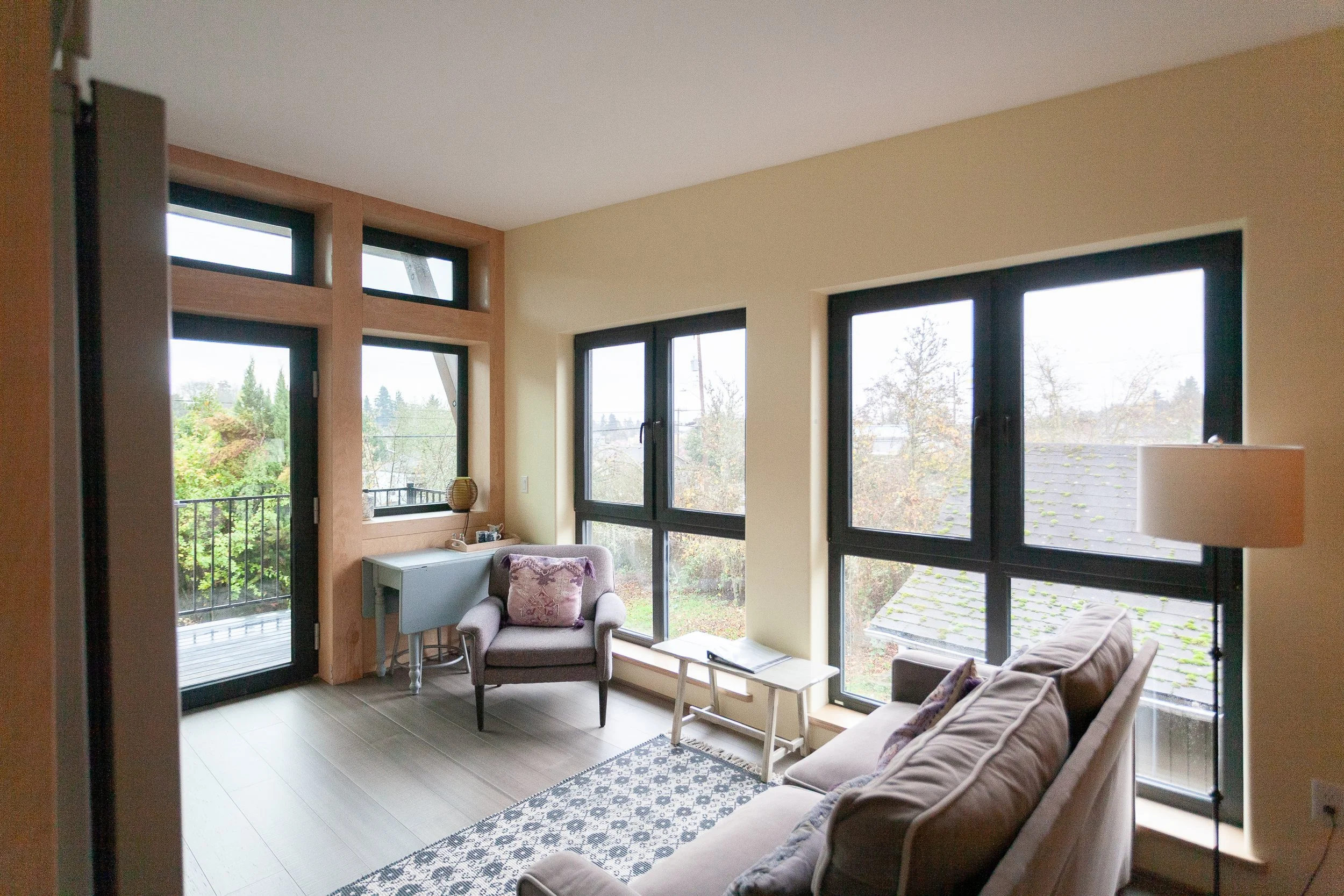
Triple-paned windows and doors reduce heat loss
Mechanical Systems
Ventilation: At the heart of the building is a Zhender heat‑recovery ventilator (HRV). With an airtightness target of 0.6 ACH50, fresh air must be intentionally supplied.
The HRV provides: Continuous, filtered, fresh air; heat recovery of roughly 80%, creating even temperatures with no drafts.
The result is a quieter, healthier interior environment—especially valuable during wildfire smoke events common in summer.
Heating: Electric radiant panels were installed high on the walls. While effective, the team notes that a mini‑split heat pump would be the preferred solution today.
Domestic Hot Water: A SANCO2 high-efficiency CO2 heat‑pump water heater located in the main house supplies hot water to Mini Z via underground piping, replacing a traditional gas- or electric-powered resistance heater.
Lighting and appliances were selected for efficiency, without relying on specialized or exotic equipment.
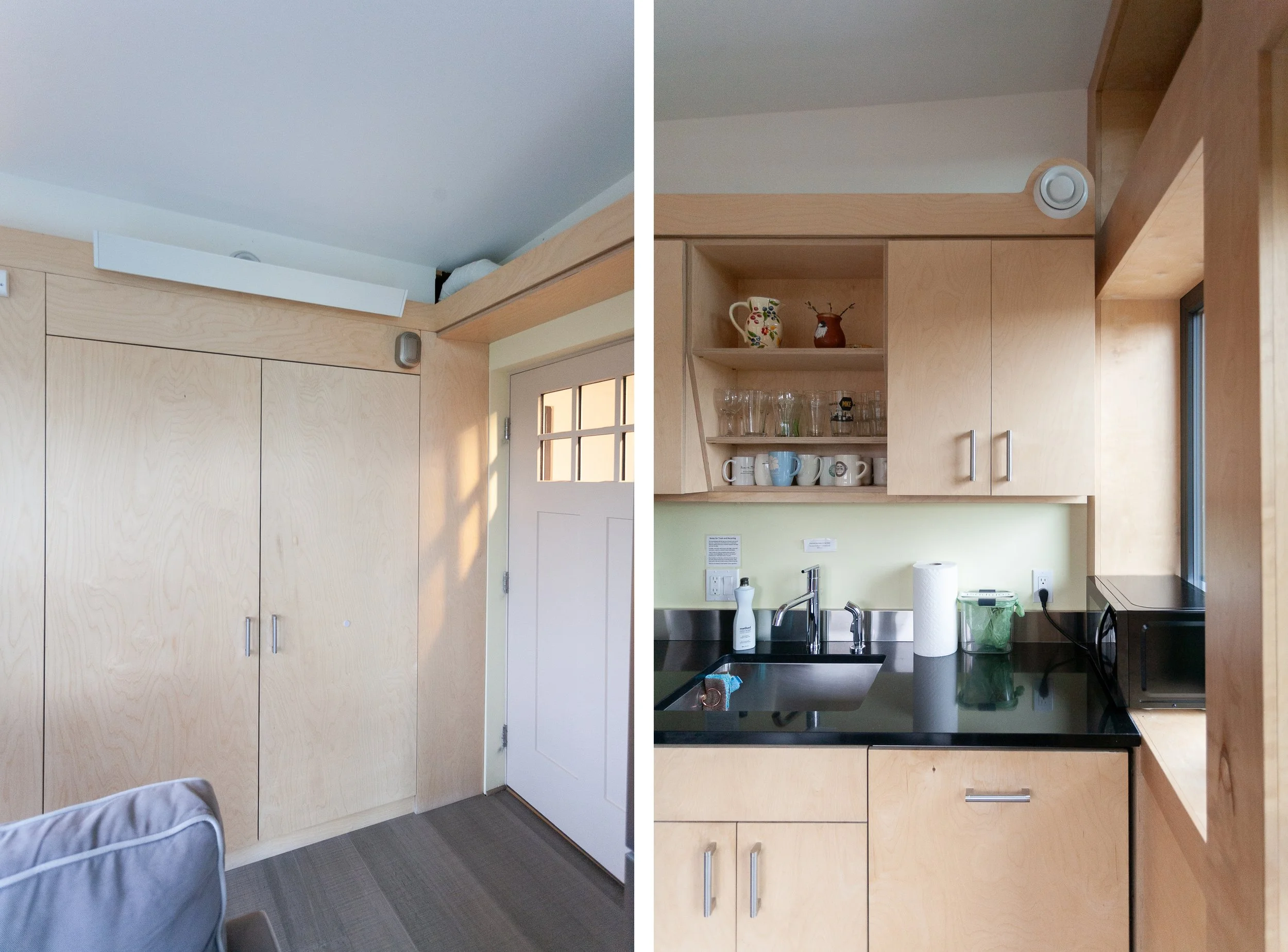
Left: radiant heating unit above closet. Right: HRV vent above cabinets.
Performance & Comfort
Beyond energy use, the most noticeable outcome is comfort. Interior surface temperatures are consistent throughout the space. No cold spots, drafts, or temperature swings. Fresh air is continuous and filtered. For occupants, the experience is subtle but unmistakable: the building simply feels better.
Lessons Learned
Mini Z was a learning curve—and a catalyst. For Bucktide, it fundamentally changed how projects are approached: Air sealing is now a baseline expectation. Window detailing and waterproofing have improved efficiency. Thermal bridging is addressed intentionally, not incidentally. Every project since has benefited from the lessons learned here, even when full Passive House certification isn’t the goal.
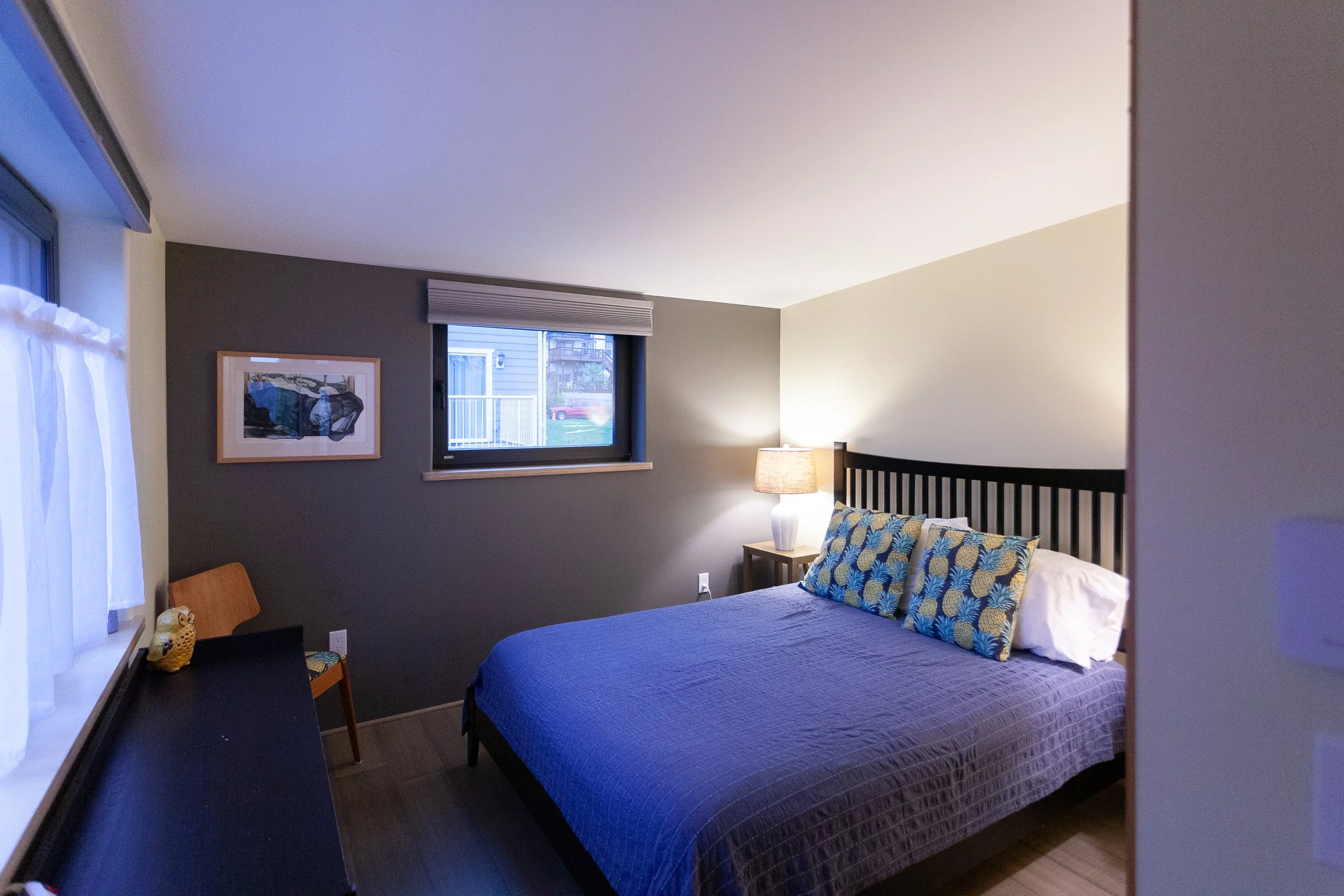
Warm and cozy bedroom without drafts or temperature swings.
Why It Matters
Mini Z isn’t flashy. It doesn’t announce itself as a high‑performance building. In many ways, that’s the point. It demonstrates that Passive House principles can be applied to small, everyday projects and that doing so results in buildings that are more comfortable, more durable, and better aligned with a low‑carbon future.
For Bucktide, Mini Z represents the start of a long‑term commitment: building smarter and healthier, and letting building science—not old technologies—drive decisions.
What’s Next
Vacuum-insulated windows: Joe’s ongoing experimentation continues, including interior storm windows with vacuum‑insulated glazing. He just installed ten LuxWall windows in his home, with the largest being 4’x4’.
For Bucktide’s owner, Alex, he just finished construction on his personal home, a gut renovation project that transformed a 1920’s bungalow into a modern high-performance, low-carbon home built for generations to come.